
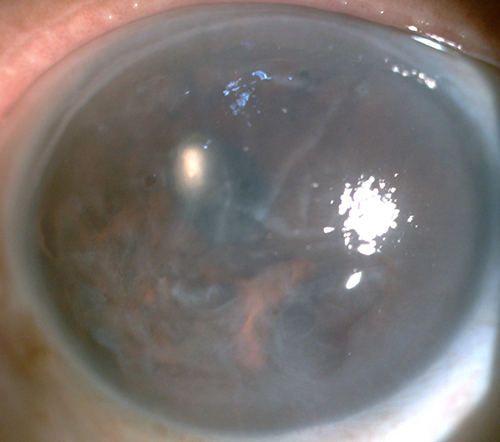
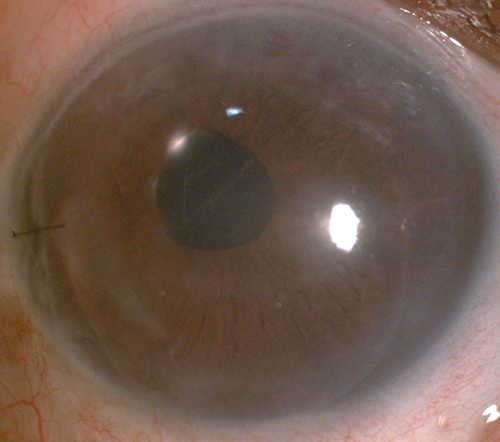
Corneal Transplantation
Advanced Corneal surgical procedure that involves removal of diseased cornea of the patient and replacing it with healthy cornea from a donor. Various types of Corneal transplantation include –
1. Penetrating Keratoplasty (PK) or Full thickness corneal transplantation involves replacing the entire thickness of the cornea with a donor cornea. This surgery is usually performed to improve vision in eyes with corneal scar, edema or other diseases. PK surgery may sometimes be performed to eradicate infections and Save the eye ball.
2. Deep Anterior Lamellar Keratoplasty (DALK) is a partial thickness corneal transplantation technique which is more challenging but with greater long - term success rate. It is most commonly performed in Keratoconus, Corneal scars and in Ocular surface disease.
3. Descemet Stripping Automated Endothelial Keratoplasty (DSAEK) and Descemet Membrane Endothelial Keratoplasty (DMEK) are advanced partial thickness corneal transplantation techniques for diseases of the corneal endothelium which lead to corneal edema and vision loss. These are sutureless procedure with very high success rate
Red Eye
Red eye is most commonly is due to Conjunctivitis which can be due to infection or allergy. Red eye with other symptoms like pain, loss of vision etc could be due to more serious eye disease and requires immediate consultation with eye doctor.
Dry Eyes
Dry eyes may occur due to decreased tear production, abnormal tear film, increased exposure to electronic gadgets and in many other conditions. Simple dry eyes can be treated by limiting screen exposure and taking regular breaks, using artificial tears and by following the simple 20-20-20 rule
Ocular Trauma
Ocular trauma or injury to the eye is an emergency. It can happen due to any blunt or sharp object hitting the eye or due to exposure to any acid, lime or chuna or any chemical. Very often young children get injured and are often scared to open their eyes. Timely checkup and initiation of treatment is very important.
Eye Allergy
Eye allergy causes red eye with itching, watering, discomfort. Often, the cause of allergy is unknown. Applying ice cubes or cool eye packs often relieves allergy. It is also important to keep your house clean and dust free and consult doctor during exacerbations.
Keratoconus
Disease in which the Cornea or the front layer of the eye changes its shape and becomes conical leading to progressive decrease in vision and it usually affects both eyes. Common symptoms include frequent change of glasses, inability to see clearly with glasses etc. Eye check and Topography tests are important to make a diagnosis. Can be treated easily with collagen cross linking, lasers, contact lens etc if diagnosed early. Advanced cases need corneal transplantation like DALK (Deep Anterior Lamellar Keratoplasty).
Pterygium
Pterygium is a fleshy mass which can cover the Cornea to make it irregular and cause decrease of vision. It is usually caused by excessive exposure to sunlight. Pterygium which is increasing in size should be removed by surgery.
Corneal Edema
Corneal edema is a condition in which fluid enters into the cornea causing loss of corneal clarity and loss of vision. Most common causes of corneal edema include Fuch’s Endothelial Corneal Dystrophy (FECD), post Cataract surgery corneal edema, following corneal infections etc. Severe cases may be treated with advanced sutureless corneal transplantation procedures like DMEK (Descemet Membrane Endothelial Keratoplasty) & DSAEK (Descemet Stripping Automated Endothelial Keratoplasty).
Corneal Ulcer
Corneal ulcer is infection of the cornea due to bacteria, fungus, virus or any other micro-organisms. If one notices a white spot on the black part of the eye along with pain, redness, loss of vision. This can be a serious problem and lead to significant loss of vision. Doctor consultation should be done at the earliest.
Corneal Opacity
Corneal opacification is partial or complete whitening of the cornea following corneal infection or injury. It causes decrease in vision and also gives poor cosmetic appearance. If very dense or thick, may need corneal transplantation surgery like PK (Penetrating keratoplasty) or DALK (Deep Anterior Lamellar Keratoplasty).
Lighter opacities can be treated by laser or contact lens.